Bolting
The choice of studbolts, bolts and nuts for a application is very important. These items should have some form of marking or stamping on them and the piping specifications detail the size and materials to be used on the application.
Bolt Material Grade
Bolt material grades are chosen depending on the duty of the line. Incorrect bolting chose can lead to integrity failures in the systems. For example, B7 bolting materials are used on low temperature systems and are not suitable as the bolting on high temperature applications as they are prone to embitterment failures.
Stainless steel bolts also have restrictions at higher pressures, this is due to the relatively low strength of the material.
Normally the piping specification will state the material grade of bolts and nuts be used on a joint. Common bolt specifications are abbreviated as follows:-
- Normal alloy steel: grad B7 bolts + grade 2H nuts.
- Low temperature alloy steel: grade L7 bolts + grade 4 nuts
- Austenitic stainless steel: grade B8M bolts + grade 8M nuts.
Bolt Thread
The majority of threads forms on studbolts / bolts used on flanged joints are Unified Inch Series to either BS 1580 or ANSI B1.1. The thread are determined by quoting a diameter and a certain number of threads per inch. Other materials such as alloy steel and stainless steel bolting two thread types are used:-
Bolt diameters up to and including 1 inch – a unified coarse (UNC) is used. The number of threads per inch depends on the diameter of the bolt. Bolt diameters 1.1/8 inch and above – 8 threads per inch (TPI) or the 8UN series is used.
Occasionally we are required to use metric bolts / studbolts. It is important that we know the pitch of the bolt as many of the bolts may have the same diameter of bolt but the thread pitch differ. This information will be on the piping specifications.
Bolt Coating / Plating
Bolts can be supplied with many different coatings. These coatings are designed to assist in the tightening of the bolts and to protect the bolt material from potential corrosion. They can be Zinc plated, PTFE coated or Cadmium plated to name a few.
Additionally to the coatings that we can find, we also utilise lubrication such as Copper greases, Nickel and Molybdenum and even Vaseline to name a few.
These lubricants are used for a multitude of reasons, such as to assist in the prevention of corrosion on the bolts, making the removal of the bolts easier when dismantling a joint but lubricants are mainly used to reduce the friction that can be found between the threads of the nuts and bolts as well as the friction that occurs between the spot face of the nuts and the flange face during tightening of the joints.
The type of lubrication that is applied to the bolts will dictate the final torque loads being applied, for example a bolt that has no lubrication applied to it (a dry bolt) will require a higher applied torque value applied to achieve a flange seal, whereas a bolt with Copaslip lubrication correctly applied to the threads of the bolt and the spot face of the nut, will require roughly 50% of the dry torque figure.
Coefficient of friction can be found by contacting the supplier of the lubricant. A crucial factor when calculating the applied torque value to be used is the coefficient of friction.
PTFE coated bolts have a wide range of coefficient of friction, so it is important that we contact the supplier of these bolts to gain the correct information for the torque calculations.
Cadmium plated components give off toxic fumes when sufficiently heated to high temperatures. Additional safety precautions should be taken when removing these bolts from situ and gloves should be worn at all times when handling these bolts.
Bolt sizes
Bolt Diameter: Flange class and size will have a specific bolt hole and bolt diameter, which can be found in the piping specifications.
Bolt Length: Specific to the flange class, size and type.
There are exceptions to the standard bolt length:- When tightened a flange using bolt tensioning equipment, the bolt length must be long enough to suit the equipment (minimum 2Ø of bolt protrusion above the flange face).
For flanges separated by a spade or spacer; consider the spade thickness and the additional gasket for selection of the studbolt length. The length should be found in the piping specifications.
Material Grade: As indicated in the piping specification. The material grade will be stamped on the end of the stud bolt, either B7, L7, etc. If no stamping is found then do not use these bolts as they may be of the wrong grade of material. The material grade of the Nut will be stamped or forged on the end face e.g. 2H, 4 etc.
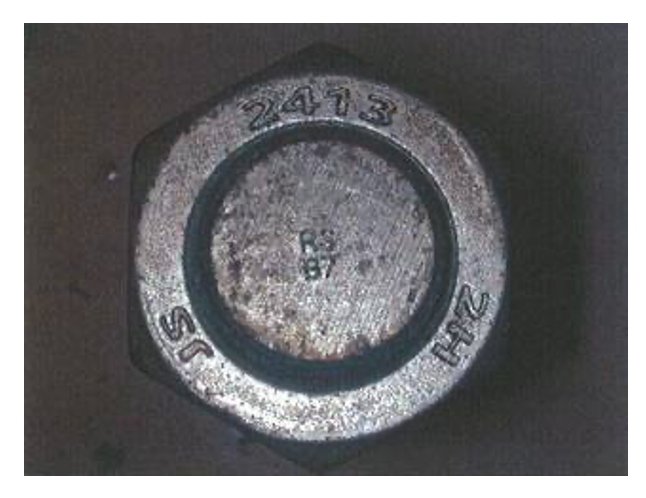
- Bolt coating: As indicated in the piping specification, Cadmium Plating, Zinc plating, PTFE coat, etc.
- Thread Form: Should be supplied in piping specification.
- Nuts: Should be “heavy series” hexagon nuts.
Bolting – Do’s and Don’ts
Do’s
- It is important that the correct bolt size and material are used. (Refer to the piping specification).
- Allow for a minimum of two threads to protrude outside the nut once tightened. This is a good working standard. The exception to this rule is when the flange / joint requires hydraulic bolt tensioning, an additional length of the bolt extension is required to be exposed outside the nut.
- It is important that the bolts used are clean and rust free and the nuts can run the full length of the bolt.
- Apply a coating to the stud, the nut thread, the nut and the flange bearing surfaces with the selected bolt thread lubricant.
- Inspect the flange surface area where the nuts will seat making sure that there is no damage as this will reduce the residual bolt load leading to possible loss of flange integrity.
Don’ts
- Do not use damaged stud bolts, bolts or nuts and always inspect used bolts for potential bolt yield.
- Do not use nuts or bolts that do not fit correctly together.
- Do not use bolting that cannot be correctly identified.
- Do not mix stud bolts, bolts or nuts with different coatings or lubrication on a particular flange.
- Nuts should not be assembled with the identification markings against the flange. The identification markings should always point outwards.
- Do not use bolting which is not clearly marked, place them in a quarantined area and clearly label them stating the problem that may have been seen.
Common Washer Types for Bolted Joints
- Flat washers
- Square plate washers
- DTI washers
- Hardened washers
- Taper washers
- Dubo washers
- Spring washers
- Belville washers
- Disc springs
- Shakeproof washers
- Nord-lock washers
- Plasti washers
- Schrorr washers
- Starlock washer
- Tab washer